TMS and OCD: what obsessive-compulsive disorder is and how TMS may support care
Quick answer: OCD is not just being tidy. Obsessive-compulsive disorder is repeated thoughts and rituals done to ease them, and they can take a lot of time and peace of mind. TMS is a non-invasive technology that in 2018 received the first FDA authorization for OCD, as an add-on treatment for adults. It does not replace your treatment: only the physician determines that in an evaluation, based on your case.
What OCD is, in general terms
Obsessive-compulsive disorder has two parts that feed each other. Obsessions are thoughts, images, or urges that repeat and cause anxiety or distress, even when the person knows they make no sense. Compulsions are the rituals done to ease that anxiety: washing hands again and again, checking doors or appliances, ordering or counting until it feels «just right». The problem is not the thought itself, but the time and peace of mind lost in that cycle.
It is also important to say it clearly: OCD is not being tidy or a perfectionist, it is not a choice, and it does not go away with willpower alone. It can show up in many ways and has many possible causes, and there is no single test that diagnoses it by itself. That is why a professional evaluation is the first step, and not an online questionnaire, a video, or this article. This article is educational: it aims to give clear information so you can arrive at an evaluation with questions and realistic expectations, not to diagnose or replace an evaluation.
What TMS is
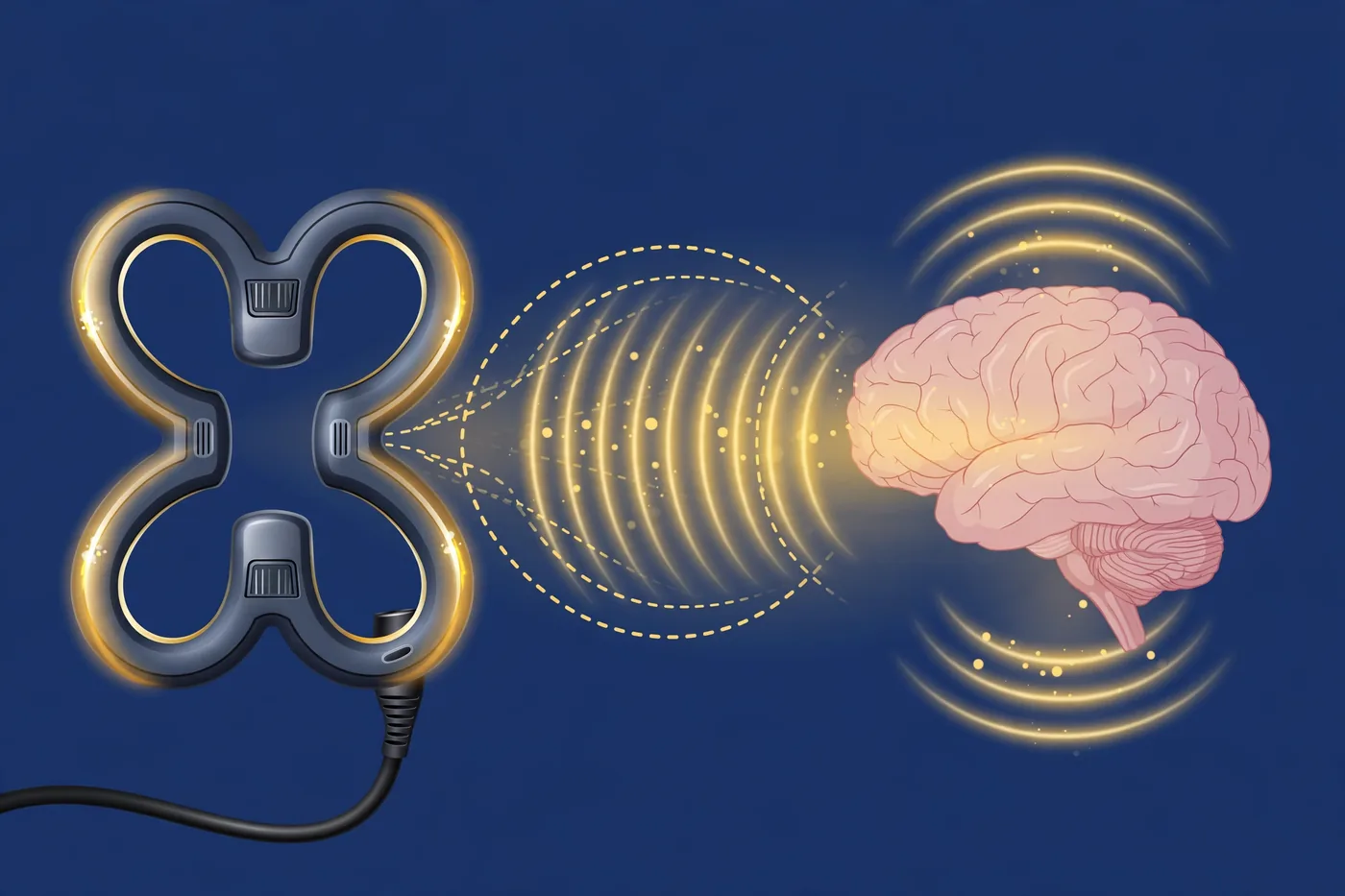
Transcranial magnetic stimulation is a non-invasive neuromodulation technique. In simple terms, it uses magnetic pulses to stimulate specific areas of the brain, in sessions scheduled at the clinic. It is not surgery, it does not require general sedation, and it does not involve implanting anything. It is applied with specialized equipment, following a protocol defined by the physician, after an evaluation.
TMS has been studied as a support in mental health, under specific protocols for each topic. That does not mean it is for everyone, or that it works the same in every case, or that it replaces other treatments. It means that, in some cases and under medical evaluation, it may be a support option within a broader plan, which may include medical follow-up, psychotherapy, or other care, depending on each person.
The FDA authorization of 2018
In August 2018, the FDA issued the first De Novo authorization (DEN170078) for a non-invasive device for OCD, as an add-on treatment in adults. It is the first authorization of this kind for obsessive-compulsive disorder, and it came after years of use of the technology in other mental health topics.
The wording matters: we say «authorization» (clearance) and «add-on». Add-on means TMS is added to the treatment the person already has, not that it replaces it. Whether TMS may support in a case of OCD can only be determined by the physician in an initial evaluation, based on each person's history, symptoms, and previous treatments.

What a session is like, step by step
First, an initial evaluation. In that evaluation, the case is heard, the history, symptoms, previous treatments, and health conditions are reviewed, and it is explained clearly whether TMS may support or whether another path is better. Without an evaluation, there is no way to know if it is a suitable option. Then, if the physician determines so, a session plan is scheduled. Each session lasts 50 minutes, at the clinic. During the session, the person is awake, seated, and the equipment applies the pulses according to the protocol. After the session, the person can resume their usual activities, following the physician's instructions.
The number of sessions, the frequency, and the protocol depend on each case and are defined in the evaluation, not in this article. An exact number of sessions for a result cannot be promised either, because results vary by person, by history, by adherence, and by other factors that are only known in the evaluation.
What it can support and what it does not promise
TMS may support, in some cases, as an add-on within a supervised plan. That is different from promising a cure, promising it will work in every case, or promising it will replace a treatment the person already has. This article makes none of those promises, and no serious article should make them without knowing the case.
It is also important not to stop a current treatment because of an article. If you already have a treatment, talk to your physician before changing it, stopping it, or combining it with another option. Changing a treatment without supervision can be risky, even with good intentions.
Common myths about OCD and TMS
- «OCD is just being tidy.» No. It is a mental health condition that deserves professional care.
- «TMS is surgery or painful by definition.» No. It is a non-invasive technique, at the clinic, without surgery and without general sedation, and the experience varies by person.
- «A few sessions and I am cured.» That cannot be promised. Results vary and are assessed in follow-up.
- «If it does not work for me, it is because I did not try hard enough.» No. The response to a treatment depends on many factors, and it is not a judgment about the person.
- «I do not need an evaluation, I can start directly.» No. First an evaluation is done, and only the physician determines whether TMS may support in each case.
When to seek help soon
If repeated thoughts and rituals take a lot of your time, interfere with your work, family, or studies, or cause you a lot of distress, it is worth seeking professional care. If you or someone close to you has thoughts of harming themselves, seek professional help immediately, go to an emergency service, or call local emergency services. Do not wait for a scheduled appointment. Asking for help on time is part of care, not an exaggeration.
What to expect from your evaluation
In an evaluation you can expect questions about your symptoms, since when you have noticed them, how they affect your daily life, what treatments you have tried, and what you hope for from the process. You can also expect a clear explanation: whether TMS may support in your case, what the plan would be like, how long each session lasts, what it costs, and what follow-up would be done. And you can expect your own questions: bring a list, write down your doubts, and do not settle for an explanation you do not understand. A good evaluation feels like a conversation, not a sale.
How to prepare for an evaluation, without self-diagnosing
Preparing does not mean arriving with a diagnosis already in place. It means arriving with useful information: which thoughts repeat, which rituals you do to ease them, since when you have noticed them, how they affect your sleep, your work, or your relationships, what treatments you have tried, what medications you take now, and what you would like to achieve with the process. That information helps the physician understand your case, and it helps you not to forget important questions during the consultation. If you feel embarrassed or nervous talking about these topics, that is normal: professionals who work in mental health are used to hearing these topics with respect and without judgment.
What is best to avoid before an evaluation is looking for a definitive diagnosis on social media, comparing your case with other people's cases, or starting or stopping treatments on the recommendation of a video or a comment. Information on the internet can help understand general topics, but it does not replace the clinical history, examination, and professional judgment of whoever evaluates you in person.
Frequently asked questions
Is OCD just being tidy? No. OCD is repeated thoughts and rituals done to ease them, and they can take a lot of time and peace of mind. It deserves professional care.
What is TMS? It is a non-invasive technique that supports mental health, using magnetic pulses on specific areas of the brain, in sessions scheduled at the clinic, with a prior evaluation.
Did the FDA authorize TMS for OCD? Yes. In August 2018, the FDA issued the first De Novo authorization (DEN170078) for a non-invasive device for OCD, as an add-on treatment in adults.
What is a TMS session like? It lasts 50 minutes, at the clinic, without surgery and without general sedation. First an evaluation is done, and only the physician determines whether TMS may support in each case.
Does TMS cure OCD? This article does not promise a cure. It may support in some cases, as an add-on to treatment; results vary from person to person and only the physician determines that in an evaluation.
How much does it cost? The initial consultation is free if you continue with treatment, and each session costs 1,000 pesos. To schedule, call 664-635-1809.
Sources: FDA, De Novo DEN170078 (August 17, 2018); BrainsWay, press release of March 5, 2019.
Related articles
Before your evaluation
- Write down which thoughts repeat and which rituals you do to ease them
- List of previous and current treatments
- Questions you want to resolve in the evaluation
- Times when you can attend 50-minute sessions